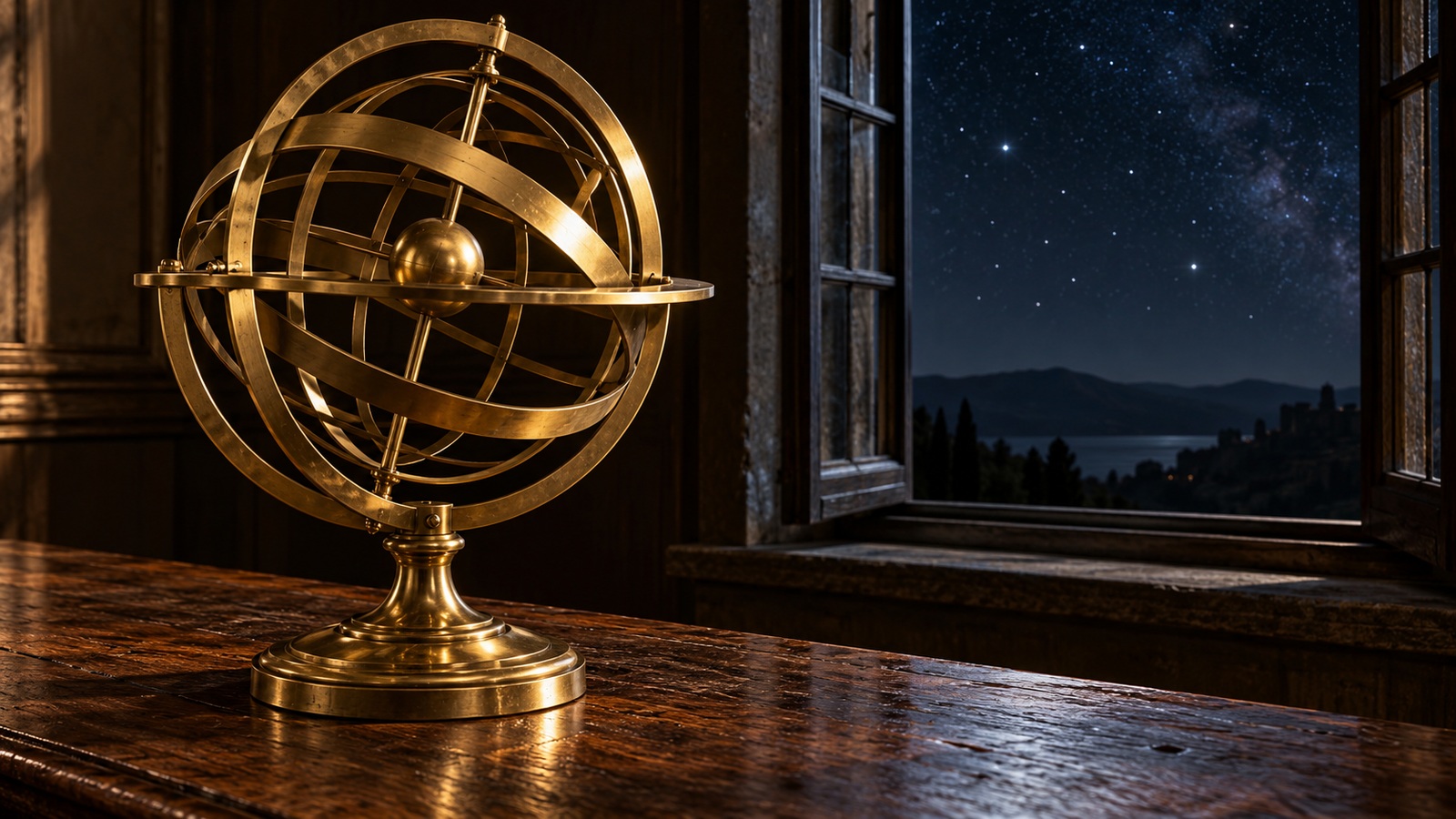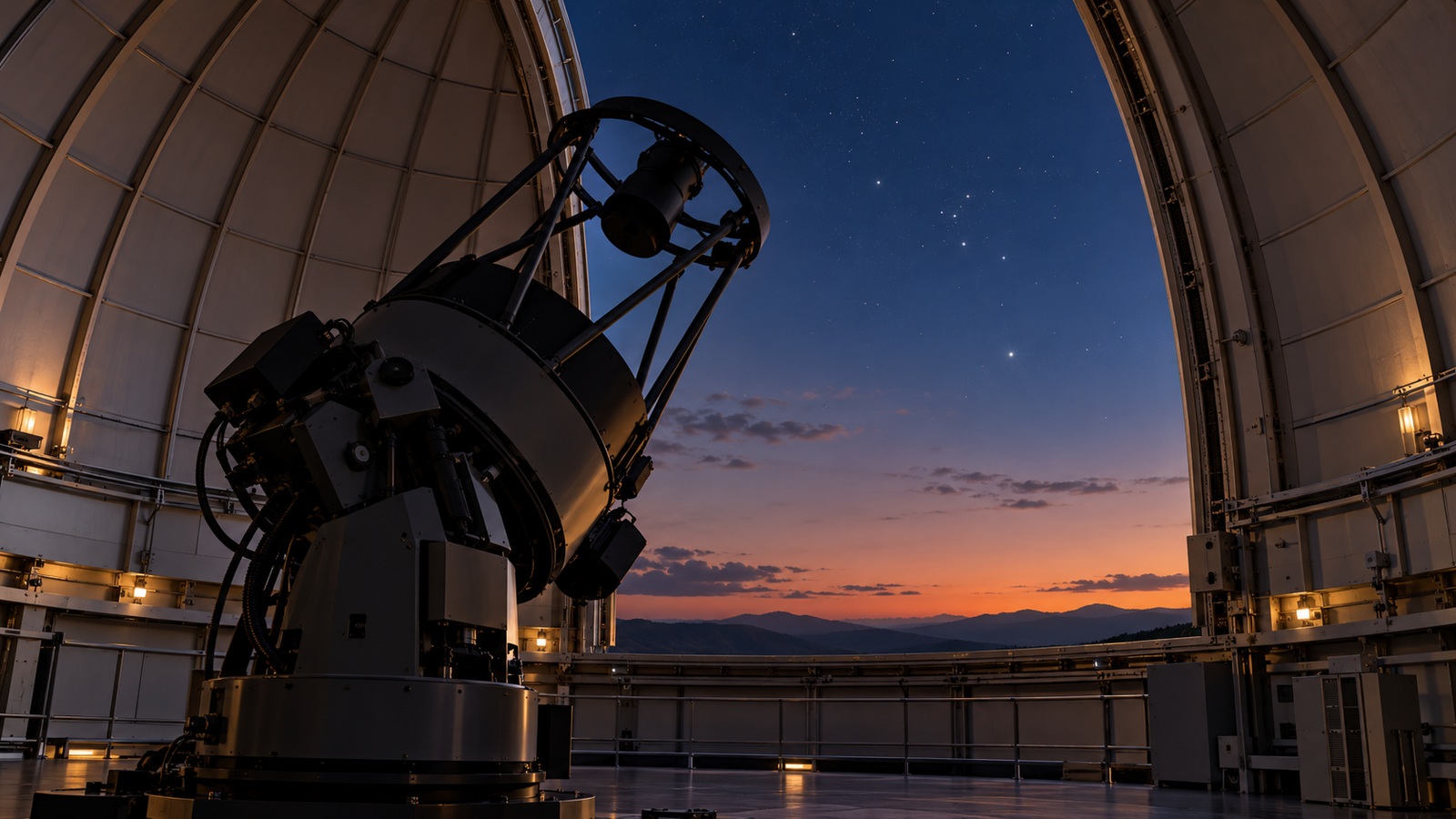
Two Ways of Asking Questions About the Sky
Astronomy and astrology both use celestial names, but they ask different kinds of questions and rely on different ways of supporting their answers. Astronomy investigates objects and processes in the universe through observation, measurement, mathematical models, and tests against evidence. Astrology interprets celestial positions through symbolic traditions that connect them with human character, experience, or timing. Their shared vocabulary and long historical overlap can make them seem interchangeable, especially when both discuss planets, signs, or eclipses. The important distinction lies in what follows from those observations. Calculating where Saturn appears is an astronomical task; assigning a personal lesson to that position is an astrological interpretation. Understanding that boundary helps you read both scientific reporting and popular horoscope content more carefully. It also lets you enjoy cultural symbolism without confusing a personally meaningful story with a scientifically demonstrated account of how the world works.
Astronomy Begins With Measurable Questions
An astronomer might ask how far away a star is, what a planet’s atmosphere contains, or how quickly a galaxy rotates. The answer needs a method for collecting evidence and assessing uncertainty. Different instruments can contribute different kinds of observations, and the result should remain open to revision when better evidence becomes available. A useful scientific explanation does more than sound plausible: it must connect with observations in a way that allows competing accounts to be compared.
This does not mean that every astronomical question has a settled answer. Much of the field concerns uncertainty, incomplete observations, and models that need improvement. The scientific distinction is the process used to investigate those limits. Researchers specify what is measured, what assumptions enter the calculation, and what evidence would count against a conclusion. Uncertainty is part of the work rather than a reason to replace the method with an unfalsifiable story.
| Comparison | Astronomy | Astrology |
|---|---|---|
| Typical subject | Physical objects, positions and processes | Symbolic relationships between sky patterns and experience |
| Example output | A local eclipse visibility prediction | A traditional interpretation of that eclipse |
| Support required | Observations, models and tests | Attribution establishes a tradition; predictive claims still need independent evidence |
| Personal meaning | Not established by a position calculation | Can be a chosen reflective use |
Astrology Organizes Symbolic Interpretations
An astrological reading assigns significance to celestial positions according to a chosen tradition. A birth chart, for example, may connect planets, zodiac signs, houses, and aspects with descriptions of personality or life themes. Different schools use different rules and emphasize different features. These practices can function as reflection, spiritual ritual, cultural inheritance, or divination, but their interpretations should not be presented as scientifically established mechanisms for predicting an individual’s experiences. The presence of calculations in the chart does not by itself establish the truth of the meanings assigned afterward.
Shared Data Do Not Mean Shared Conclusions
Consider an eclipse. Astronomical calculations describe when it occurs, where it is visible, and how the bodies align. Those predictions can be checked against observed timings and geographic circumstances, as the dated eclipses in our 2026 sky-event reference illustrate. An astrologer may interpret the same event through signs, houses, or symbolic themes. The physical prediction and interpretation remain separate claims even when they begin with one date.
The same separation applies to a planetary position. An ephemeris can provide a calculated longitude, while a chart interpretation connects that longitude with an area of life. Accuracy in the first step does not automatically validate the second. A beautifully calculated chart can still contain claims that need their own independent evidence. Keeping track of where calculation ends and interpretation begins is one of the most useful habits for a curious reader.
You can apply the habit without dismissing every personal response to the sky. Feeling moved by an eclipse is a real human experience. Saying that the eclipse caused a specific relationship outcome is a different claim, requiring evidence beyond the feeling itself. The distinction protects the richness of the experience while keeping causal explanations accountable.
Why the Vocabulary Overlaps
Both fields inherited words from earlier traditions of sky study, when observation, calendars, omens, philosophy, and practical timekeeping were often intertwined. The names of planets and constellations also carry mythological histories. Shared names therefore reveal cultural continuity, not necessarily shared modern methods. A planet called Venus remains an astronomical object whether a person is studying its atmosphere or using its name symbolically.
Historical boundaries also varied by place and period. It is too simple to imagine one worldwide discipline splitting into two perfectly separate branches on a single date. Traditions exchanged ideas across languages and institutions, and individuals could pursue observational work alongside forms of divination. Understanding that complexity helps explain the overlap without suggesting that today’s scientific standards are identical to the standards of every earlier society.
Signs and Constellations Need Different Definitions
Popular discussion often mixes zodiac signs with astronomical constellations. In tropical astrology, the zodiac is divided into twelve equal sectors referenced to the seasonal equinox framework. Astronomical constellations are defined regions of the sky, with unequal extents along the Sun’s apparent path. The International Astronomical Union’s constellation resources describe the astronomical framework. Recognizing the difference prevents the mistaken assumption that every use of a sign name is a claim about the Sun occupying the same modern constellation boundaries.
What Makes a Prediction Testable?
A testable prediction needs enough detail that a result can be evaluated fairly. Predicting an eclipse at a specified time and location is very different from saying that a person will encounter change, tension, or opportunity. Broad descriptions can fit many possible experiences, making it difficult to identify a result that would genuinely contradict the claim. The more flexible the interpretation becomes after the event, the less informative the apparent success may be.
A careful evaluation also needs an appropriate comparison. If a reading feels accurate, ask whether other people would recognize themselves in the same description and whether incorrect details were given equal attention. If a timing claim appears successful, ask how the outcome was defined before it occurred. These are ordinary reasoning questions, useful far beyond astrology, that help separate a persuasive narrative from reliable predictive performance.
It is reasonable to distinguish personal usefulness from predictive validity. A reflective prompt can help someone think about a relationship even if its celestial explanation is unsupported. The practical benefit may come from pausing, writing, or considering a different perspective. You can acknowledge that benefit without claiming it demonstrates a planetary cause.
Scientific Authority Depends on the Relevant Evidence
A scientific-sounding word is not evidence by itself. References to energy, vibration, quantum behavior, or gravitational influence need clear definitions and measurements if they are used as physical explanations. Borrowing the vocabulary of science does not remove the need to show how the claimed effect operates and how it was tested. When an article shifts from symbolic language to claims about measurable forces, the standards for supporting those claims must shift as well. Asking for that support is a way to understand the claim, not a refusal to consider new ideas.
Use Each Kind of Source for the Right Task
For eclipse visibility, planetary motion, telescope guidance, or astronomical dates, use observatories, scientific institutions, and other sources whose task is to calculate or measure those phenomena. The International Astronomical Union identifies astronomy as a scientific field, while national observatories publish technical data for specific observing needs. A horoscope column is not a replacement for those resources when you need accurate local circumstances.
For an explanation of a particular astrological tradition, consult a source that clearly identifies its interpretive system. Notice whether it distinguishes beliefs from physical facts and whether it acknowledges disagreement between schools. A responsible explanation should not disguise a symbolic convention as a discovery about how every person behaves. Source choice is most helpful when it follows the question you are actually trying to answer.
Let Personal Interest Coexist With Clear Boundaries
You do not have to decide that every interest in astrology is an attempt to do astronomy. Some readers enjoy mythology, seasonal reflection, or the structure of a chart as a journaling aid. Those interests can be discussed on their own terms. Problems arise when a symbolic reading is used to overrule direct evidence about a person or when a broad prediction is treated as a dependable substitute for informed decisions.
A practical approach is to label what you are doing. “I use this as a reflection prompt” makes a different claim from “this predicts what will happen.” “This interpretation belongs to a tradition” differs from “this is an established scientific finding.” Clear language makes a conversation more honest and helps readers decide what weight to give an explanation.
It also leaves room for ordinary human agency. A chart label cannot tell you whether another person will keep a promise, communicate respectfully, or complete a task. Those questions are answered through behavior and context. Reflection is most useful when it leads back to those observations rather than replacing them with an identity assigned from a birth date.
Recognize the Difference in a Single Example
If you read that Saturn is visible in the evening, you can ask when, where, and how that statement was calculated. If you read that Saturn represents responsibility, you are encountering a symbolic association within an interpretive tradition. If you read that its position guarantees a particular event in your life, the article has made a predictive claim that needs evidence of its own. These sentences can appear beside one another, but they do not become the same kind of statement through proximity.
That example captures the central difference between astronomy and astrology. One studies the universe through evidence-based investigation; the other constructs meaning through celestial symbolism and associated traditions. Their historical connections explain their overlapping language. Their modern methods determine how their claims should be assessed. Keeping those two facts together allows curiosity without surrendering clarity.
Edit One Mixed Passage Into Clear Claims
Consider this invented passage: “The eclipse occurs on the listed date, so everyone will feel ready to end an old relationship.” Its first clause can be investigated through an eclipse table; its second asserts a universal human response. The word “so” supplies a causal bridge the date has not established. Removing that bridge does not erase the eclipse or require dismissing a reader’s experience. It simply stops one accurate statement from lending unearned certainty to another.
A clearer version could read: “The eclipse is listed for this date. Within this author’s symbolic practice, it is used as a prompt to consider endings. A reader may choose to reflect, while making relationship decisions from the actual circumstances.” Now the date, attributed practice, and voluntary activity each have an identifiable role. A relationship change still requires its own account; it has not become an astronomical result.
Use the same edit when an article moves from a planet’s location to a claim about your character. Identify the measured position, the named interpretive convention, and the proposed action. Then ask whether the action has a practical reason you can explain. This gives readers something more useful than an argument over one label: a way to preserve factual reporting, discuss a tradition accurately, and recognize which claims remain unsupported.