

Astronomy Meets Astrology is where science and symbolism collide—an electrifying crossroads on Astrology Streets where celestial mechanics fuel cosmic meaning. This sub-category explores how the physical universe and the metaphysical universe work together, shaping everything from your horoscope to humanity’s understanding of the sky. Astronomy gives us the facts: planetary orbits, lunar shadows, retrograde illusions, star distances, solar rhythms, and the gravitational dance that structures our cosmos. Astrology transforms those facts into insight—interpreting how these movements influence energy, emotion, timing, and personal evolution. When these two worlds meet, the sky becomes more than stars and planets; it becomes a living language. Here, you’ll discover how astronomical events like eclipses, solstices, conjunctions, and meteor showers connect to astrological themes. You’ll learn why retrogrades appear in the sky, what constellations really represent, how zodiac seasons align with Earth’s orbit, and why cosmic timing feels so eerily accurate. This is where knowledge deepens, intuition sharpens, and the night sky becomes both a science lesson and a spiritual compass. Welcome to the bridge between what we see—and what we feel.
A: No. Astronomy is an evidence-based physical science; astrology is a symbolic, interpretive system people may use for reflection.
A: Because astrology focuses on how the sky appears from Earth—our lived viewpoint—rather than heliocentric mechanics.
A: It’s the section of the zodiac band where the Sun was located along the ecliptic at your birth.
A: Yes, they reference actual planetary positions, but the meanings attached are symbolic, not empirically tested causes.
A: Tropical astrology anchors signs to equinox points, not constellations; sidereal systems choose differently. It’s about frameworks, not error.
A: Many people do—treating astronomy as factual sky knowledge and astrology as optional metaphor or personal myth-making.
A: Learning basic sky motions, phases, and cycles can make transits feel more tangible and less abstract.
A: Not at all. Naked-eye observation of the Moon, planets, and seasonal Sun paths is a powerful start.
A: Absolutely. It’s valid to question it, use it lightly as a narrative tool, or not use it at all.
A: Track the Moon’s phase and sign while actually watching it in the sky—let observation and symbolism meet in real time.
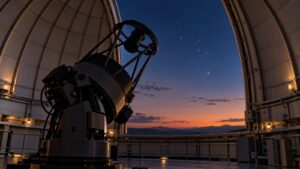
Astronomy vs. Astrology: What Is the Difference?
Understand how astronomy and astrology differ in their questions, methods, evidence, and use of celestial language, while recognizing their historical connections.
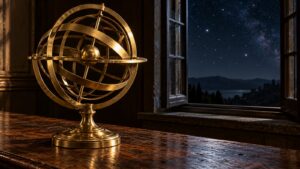
How Are Astronomy and Astrology Connected?
Follow the connections between astronomy and astrology through celestial coordinates, ephemerides, zodiac language, calendars, and historical instruments.

Why Astronomy and Astrology Historically Overlapped
Trace astronomy and astrology’s historical overlap through Ptolemy, Ibn Yunus, translated tables, Bologna’s prognostications and Kepler’s court career.