A Year of Eclipses, Meteor Showers, and Planet Watching
This 2026 celestial events calendar gathers dated highlights into a chronological reference: the year’s eclipses, principal meteor-shower periods, selected planetary arrangements, and four astronomical season markers. The table gives you a quick route to a date; the sections explain what kind of event it is and what you need to check locally. Because this guide was published in October, January through early October also form a retrospective record, while later entries remain planning opportunities. Dates describe an astronomical occurrence or a published observing period, not a promise that your town has darkness, a clear horizon, or suitable weather. This is a broad annual selection rather than a daily ephemeris of every occultation or satellite pass. Start with the month you need, distinguish a one-time eclipse from a longer planet-viewing season, and use the linked primary references for local circumstances.
How to Read This Calendar From Your Own Location
An event date is a starting point rather than a complete observing instruction. A meteor shower can peak while your part of Earth faces daylight, and a lunar eclipse can unfold after the Moon has already set at your location. Before making plans, enter your city into a current sky map or local astronomical calendar. Check the event’s altitude, direction, and local observing window rather than assuming that a widely shared date guarantees a view from your backyard.
Keep the distinction between a global instant and a local evening in mind. An equinox happens at one instant worldwide, but calendars can assign it different dates across time zones. Meteor showers usually remain active for multiple nights, so a clear adjacent night may be more rewarding than a cloudy peak. In your own calendar, save both the event and the practical window you intend to use. That small distinction prevents many unnecessary disappointments.
| Date or night range | Event | Viewing category |
|---|---|---|
| January 2–3 | Quadrantids | Meteor watch |
| January 10 | Jupiter opposition | Planet season |
| February 17 | Annular solar eclipse | Antarctic annularity |
| February 28 | Evening planetary grouping | Mixed visibility and equipment |
| March 3 | Total lunar eclipse | Moon above horizon required |
| March 20 UTC | March equinox | Season marker |
| April 21–22 | Lyrids | Meteor watch |
| May 5–6 | Eta Aquariids | Meteor watch |
| May 31 | Second full Moon in May | Calendar-defined Blue Moon |
| June 8–9 | Venus–Jupiter conjunction | Bright planet pairing |
| June 21 UTC | June solstice | Season marker |
| July 30–31 | Southern Delta Aquariids and alpha Capricornids | Meteor activity |
| August 12 | Total solar eclipse | Restricted totality path |
| August 12–13 | Perseids | Meteor watch |
| August 27–28 | Partial lunar eclipse | Regional Moon visibility |
| September 23 UTC | September equinox | Season marker |
| September 25 | Neptune opposition | Optical target |
| October 4 | Saturn opposition | Planet season |
| October 7 | Draconids | Meteor watch |
| October 21–22 | Orionids | Meteor watch |
| November 4–5 | Taurids | Meteor activity |
| November 17 | Leonids | Meteor watch |
| November 25 | Uranus opposition | Chart and optics helpful |
| December 13–14 | Geminids | Meteor watch |
| December 21 UTC | December solstice | Season marker |
| December 21–22 | Ursids | Meteor watch |
| December 24 | Full Moon near perigee | Bright lunar outing |
January Through March: Bright Planets and Eclipse Geometry
The year’s opening highlights included Jupiter at opposition on January 10, an annular solar eclipse on February 17, and a total lunar eclipse on March 3. These belong to very different observing categories. Opposition is a favorable viewing arrangement for an outer planet; an annular solar eclipse depends on being within the relevant geographic footprint and requires proper solar protection; a lunar eclipse can be watched directly wherever its phases occur above the horizon. The dates appear in NASA’s annual event overview. Use them as a record of the early year rather than as upcoming opportunities. Looking back at different event types is also a useful way to decide what you would enjoy seeking during a future observing season.
April Through June: A Changing Evening Sky
The Lyrids on April 21–22 and Eta Aquariids on May 5–6 supplied the spring shower entries. May 31 also brought the second full Moon of that calendar month, the monthly definition of a Blue Moon. The name describes calendar placement rather than blue light. June 8–9 then offered a close apparent meeting of Venus and Jupiter. A conjunction places objects near each other along our line of sight; their actual separation in space remains enormous.
A practical way to follow such a meeting is to return to the same unobstructed viewpoint after sunset. Make a small sketch showing the horizon and the objects’ relative positions, without trying to draw every star. The sketch becomes a record of change rather than an exercise in artistic precision. If you share the experience with someone else, let each person describe what they see before consulting a map; those independent descriptions can reveal which object needs a clearer identification.
The June 21 solstice provides a different kind of entry. It marks an extreme in the Sun’s annual north–south position rather than a brief object appearing overhead. Compare daylight or sunset position across weeks to connect the date with observation. Our solstice explanation shows why that turning point has opposite seasonal meanings north and south.
August’s Eclipse and Perseid Season
August joined three distinct highlights: the August 12 total solar eclipse, Perseids around August 12–13, and a partial lunar eclipse across August 27–28. The solar totality path included Greenland, Iceland, and parts of Spain; partial solar coverage elsewhere was a different experience. The late-month lunar eclipse was visible across much of the Americas and parts of Europe and Africa. NASA’s August guide supplies maps and explains those regional distinctions.
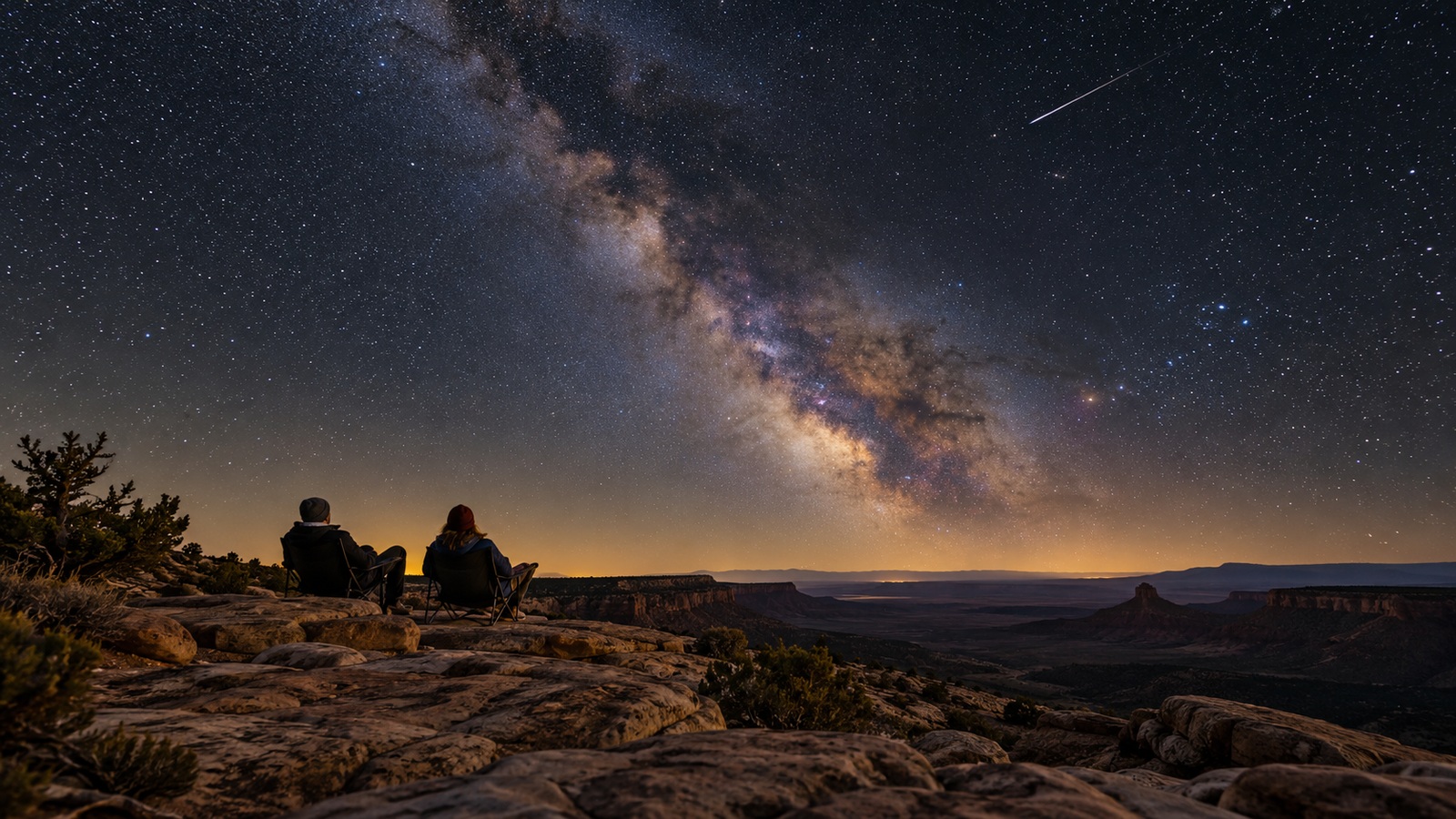
A meteor shower asks for almost the opposite observing approach. You want a broad, comfortable view of dark sky rather than a narrow instrument aimed at one point. The memorable moment may come unexpectedly after a quiet interval, which is why patience matters more than constant searching. For a future shower outing, plan a realistic stretch of observing time and resist the urge to compare your personal count with an idealized hourly rate from a headline.
September and Early October: The Season Turns
The September equinox fell on September 23 in UTC, but September 22 in some American time zones. Neptune’s September 25 opposition and Saturn’s October 4 opposition marked planet-viewing seasons; October 7 supplied the Draconid shower entry. Neptune requires optical assistance rather than a naked-eye planet parade expectation. Saturn is much easier to locate, though resolving its rings requires a suitable telescope. A planet usually remains available across neighboring nights, so an opposition is a reference for favorable geometry rather than a deadline after which it disappears. For the date-conversion distinction, compare the crossings in our equinox guide.
What Remains in October and November
For readers arriving in mid-October, the Orionids around October 21–22 and the Leonids around November 17 are useful remaining calendar markers. The Taurids also feature in early-November observing lists. These names identify recurring streams of meteoroid material encountered by Earth; they do not promise that every observer will see a dramatic display. Make your decision using the local Moon schedule, the expected weather, and the hours during which the shower’s radiant is well placed.
Choose the outing you can enjoy even if activity is modest. A sheltered rural site with a reclining chair may suit a long meteor watch, while a short visit to a nearby open park may be better on a work night. Tell companions in advance that quiet intervals are normal. When the experience includes learning a constellation, noticing a planet, or simply spending time under a clear sky, its success no longer depends on an unrealistic number of meteors.
December: Leave Room for the Geminids
The Geminids around December 13–14 are a major end-of-year meteor-shower entry. Plan for the conditions you will actually experience rather than the conditions in a beautiful long-exposure photograph. Warm layers, insulation beneath your chair or blanket, and a sensible return plan can determine whether you stay outside long enough to enjoy the outing. An impressive forecast has little practical value if discomfort sends everyone home before they have settled in.
Give the Moon its own place in the plan. Bright lunar light can reduce the visibility of faint meteors even when the air is clear. A dark site helps with local light pollution, but it does not remove moonlight from the sky. Check moonrise and moonset for your intended observing hours, then decide whether a shorter moon-free interval is available. Even when conditions are imperfect, brighter meteors may remain visible; the sensible response is to adjust expectations.
December also brings the solstice and a prominent late-month full Moon. Those entries offer alternatives for people who cannot manage a long overnight watch. A short sunset observation or a Moon-viewing walk can fit into an ordinary week. Building an annual relationship with the sky works best when your calendar includes easy, repeatable experiences alongside the rare occasions that require more planning.
Why No Single List Can Include Every Sky Event
A useful annual reference selects major recurring showers, important eclipses, and accessible planet arrangements, but it cannot replace a location-specific daily ephemeris. Occultations, satellite passes, close pairings, and newly discovered objects can create additional opportunities with narrow regional or temporal limits. Treat claims that a calendar contains absolutely everything with caution. The more productive approach is to use an annual list for orientation and consult a current local source before an outing. That combination gives you a stable overview without pretending that every detail of the sky fits onto one permanent page.
Match the Event to the Equipment
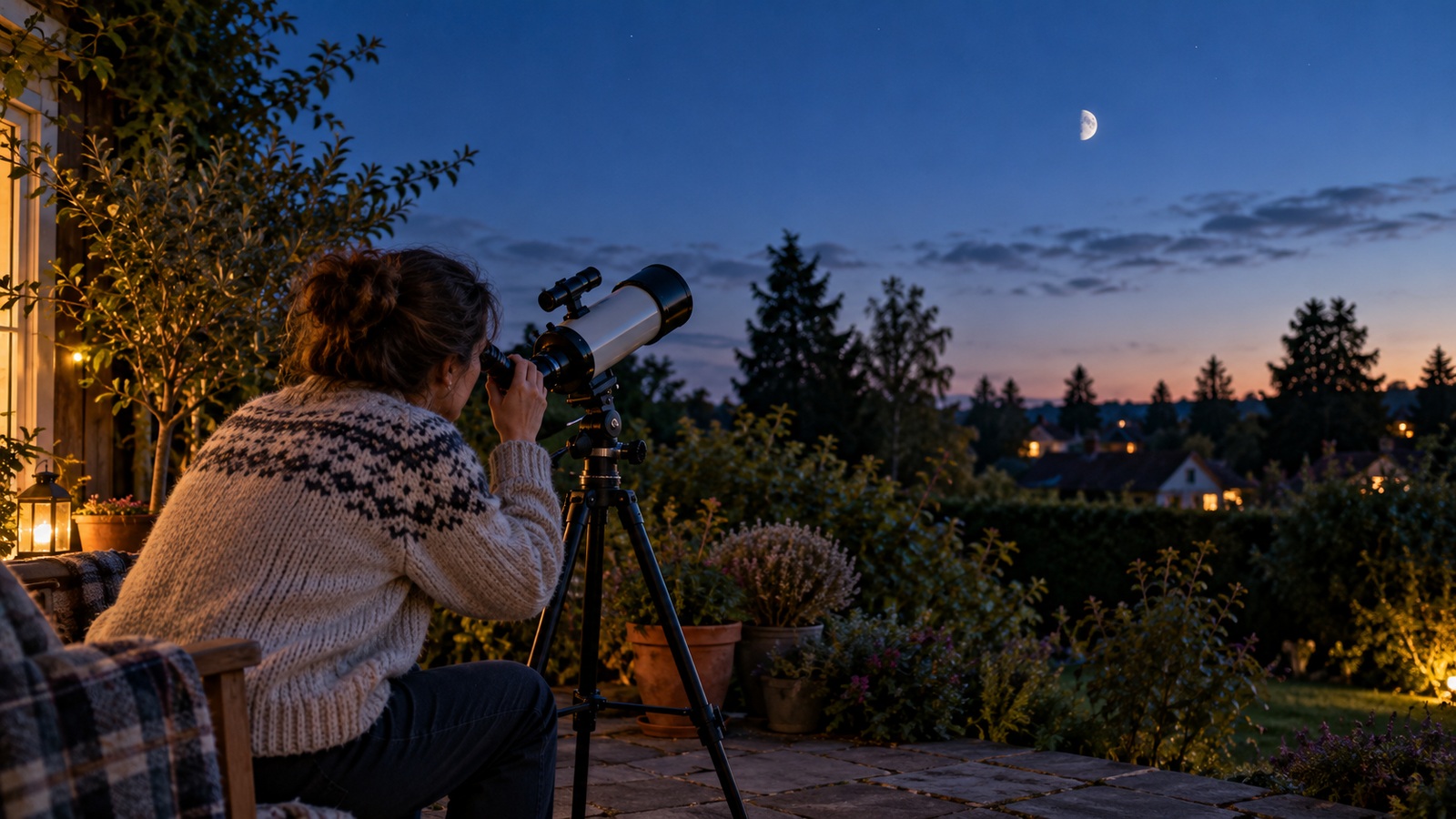
Your eyes are the appropriate first instrument for meteor showers, broad constellations, and many bright planetary pairings. Binoculars provide a different experience, making selected lunar or star-field details easier to explore, but they also narrow your view. A telescope can reveal details that an annual event calendar barely mentions, yet requires setup, aiming, and practice. Decide what you want to observe before deciding what equipment to bring. Carrying more equipment does not automatically make an outing more rewarding.
Solar observing is a separate safety category. Never aim ordinary binoculars, a camera, or a telescope at the Sun without equipment and filters specifically designed for that purpose and correctly installed. Ordinary sunglasses do not provide eclipse protection. For any future solar event, review NASA’s eclipse safety guidance in advance, including the different requirements for direct viewing and optical instruments. Sorting out those requirements during daylight is much better than improvising during an eclipse.
Turn the Annual Reference Into Your Next Observation
After an outing, write a few practical details: location, approximate observing hours, cloud cover, Moon conditions, and what you confidently identified. Separate a direct observation from an interpretation. For example, recording that you saw a bright object low in the west is different from identifying it as Venus. If you were uncertain, leave the uncertainty visible and check later. A modest record that preserves what you actually saw is more useful than a polished account filled with confident guesses.
You can also record what would improve the next trip. Perhaps a tree blocked the important horizon, a nearby light spoiled your chosen seat, or you needed warmer footwear. These ordinary discoveries make your personal calendar increasingly useful. Over a year, you are not merely collecting famous events; you are learning how your location, schedule, and preferences interact with the sky. That knowledge carries forward even when a particular evening is cloudy.
Use the table as an index, then carry one actual observing window into your diary. For a meteor watch, that means an interval outdoors; for an eclipse, it means locally visible phases; for a season marker, it might mean a daylight comparison. Readers choosing between the dates can use our selected 2026 highlights comparison to weigh the experience each offers. You now have both an annual chronology and a route from its entries to a specific evening.