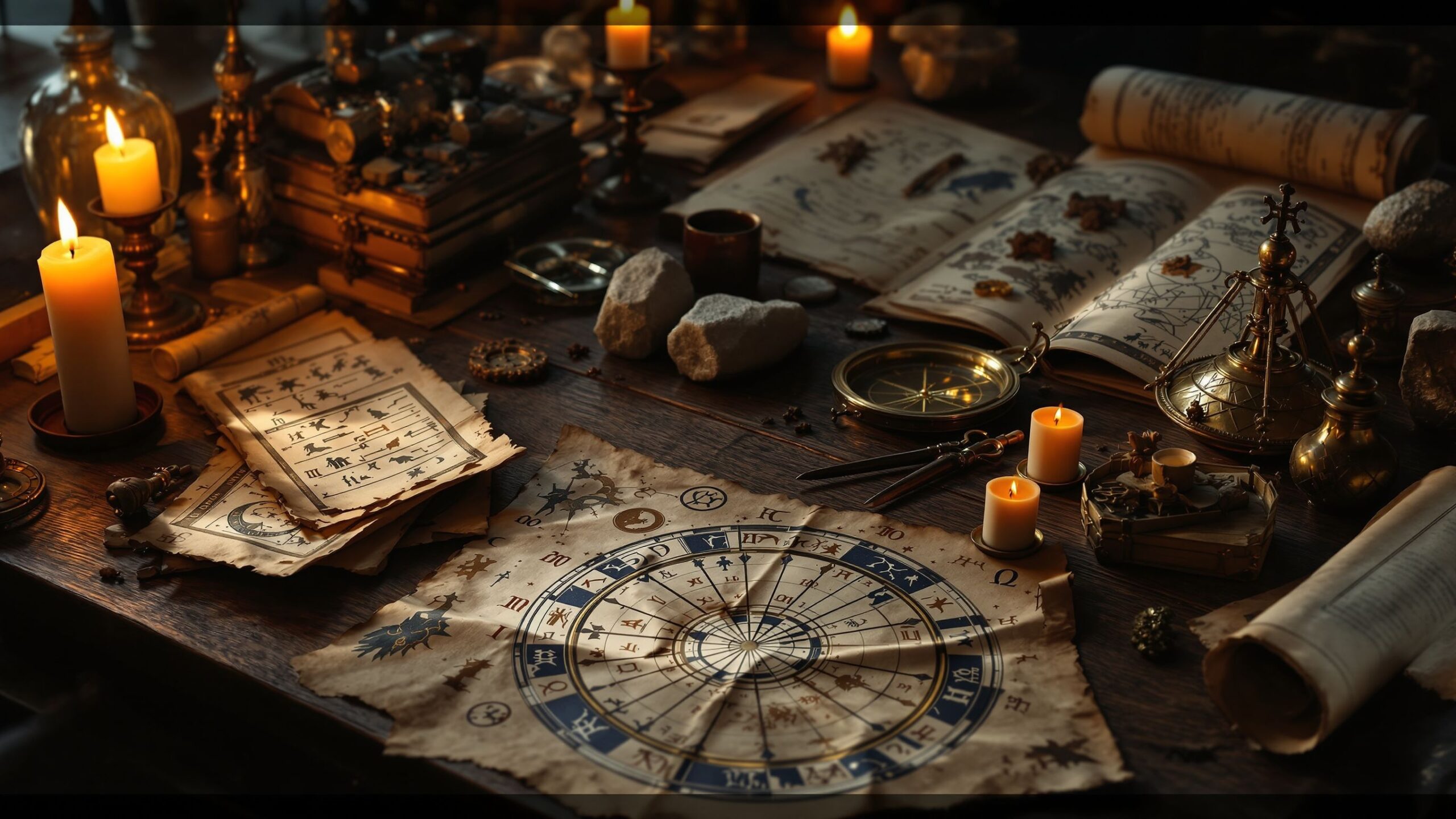
Zodiac glyphs are some of the most recognizable symbols in astrology, appearing everywhere from birth charts and horoscopes to jewelry, tattoos, and art. At first glance, these small symbols may look like simple shapes or mysterious scribbles, but each glyph carries centuries of meaning and symbolism. Behind every curve, line, and loop lies a story about personality, cosmic forces, mythology, and the structure of the universe itself. For beginners exploring astrology, zodiac glyphs often become the first doorway into understanding the deeper language of the stars. These symbols represent the twelve zodiac signs, each corresponding to a specific period of the year and embodying a unique combination of traits, archetypes, and energies. Learning what these glyphs mean not only helps you read astrological charts more easily, but also reveals the philosophical framework behind astrology itself. In this beginner’s guide, we will explore the meaning behind zodiac glyphs, why they were created, how they relate to mythology and cosmic symbolism, and what each sign’s glyph reveals about the personality and energy of that zodiac archetype.
A: It is a simple symbol used to represent one of the twelve zodiac signs in astrology.
A: No. Glyphs are symbolic shorthand, while constellations are star patterns in the sky.
A: They condense myth, energy, and identity into small visual forms rather than realistic drawings.
A: Their core meanings are widely accepted, but some symbolic interpretations vary between astrologers.
A: Aries, Taurus, and Sagittarius are often easiest because their shapes strongly suggest their symbols.
A: It is usually interpreted as claws, a shell-like motion, or cyclical emotional energy rather than a number.
A: Yes. Recognizing the glyphs makes charts much easier to follow and understand.
A: Yes. Zodiac glyphs represent signs, while planetary glyphs represent celestial bodies like Mars or Venus.
A: No. Learning them gradually is usually easier and more effective.
A: Connect each symbol to its myth, shape, and sign personality instead of trying to memorize it in isolation.
The Origins of Zodiac Glyphs
The zodiac system traces its roots back thousands of years to ancient civilizations that observed the movements of the sun, moon, and planets. Early astrologers in Mesopotamia, Greece, Egypt, and later Rome developed symbolic systems to represent celestial bodies and constellations. These symbols eventually evolved into the glyphs used in modern astrology.
Glyphs served a practical purpose. Ancient astrologers needed a fast and recognizable shorthand to record celestial observations and chart calculations. Writing out the full name of each sign repeatedly would have been cumbersome, especially in manuscripts and star charts. Simple symbols solved that problem while also conveying deeper meaning through visual symbolism.
Over time, these glyphs became standardized within Western astrology. They were passed down through medieval manuscripts, Renaissance astrology texts, and modern astrological charts. Although the designs may appear minimal, they are carefully constructed visual representations of each sign’s mythological identity, elemental energy, and cosmic role.
Understanding the symbolism embedded in these glyphs transforms them from decorative marks into meaningful cosmic signatures.
Why Astrology Uses Symbols Instead of Words
Astrology has always relied heavily on symbols rather than literal language. The cosmos itself was interpreted as a symbolic system where planets, constellations, and cycles represented psychological and spiritual forces.
Glyphs fit perfectly into this symbolic tradition. A symbol communicates complex meaning instantly, bypassing the need for lengthy explanations. In astrology, a single glyph can represent mythology, personality traits, elemental energy, and cosmic cycles all at once.
Symbols also transcend language barriers. While different cultures may speak different languages, the visual language of astrology remains universally recognizable. A zodiac glyph drawn on a chart can be understood by astrologers anywhere in the world.
This universal quality is one reason zodiac symbols have remained largely unchanged for centuries. Their simplicity ensures they remain timeless and recognizable across cultures and generations.
The Symbolism Hidden Within Zodiac Glyphs
Zodiac glyphs are not random designs. Most of them incorporate specific visual elements that reflect deeper astrological principles. Lines, curves, horns, loops, and crosses all carry symbolic meaning.
Curves often represent spirit, consciousness, or energy flow. Straight lines tend to symbolize matter, direction, or manifestation in the physical world. Cross shapes can indicate the intersection between spirit and material existence.
When astrologers study glyphs closely, they often see representations of animals, horns, waves, or other shapes associated with the mythology of each sign. In some cases, the glyph mirrors the physical appearance of the creature linked to that zodiac sign. In other cases, the design reflects the sign’s deeper energetic nature.
By decoding these visual clues, astrologers gain insights into the character and role of each zodiac sign.
Aries: The Glyph of the Ram
The glyph for Aries resembles a pair of curved horns rising upward from a central point. This design represents the horns of a ram, the animal traditionally associated with the Aries sign.
Aries is the first sign of the zodiac, symbolizing beginnings, initiative, and bold action. The upward curves of the glyph evoke forward motion and assertive energy, much like a ram charging ahead.
In astrology, Aries represents raw life force, courage, and leadership. The glyph’s shape visually reflects that energetic surge, suggesting the spark of creation and the unstoppable momentum of new beginnings.
Taurus: The Glyph of Stability and Strength
The Taurus glyph appears as a circle topped by a crescent shape resembling horns. This design symbolizes the head and horns of a bull.
The circle represents wholeness, material stability, and grounded presence, while the horns suggest strength and determination. Taurus is known for its connection to physical comfort, nature, and enduring stability.
This glyph captures the sign’s essence perfectly. The sturdy structure of the symbol reflects Taurus’ patient, persistent energy and its deep connection to the tangible world.
Gemini: The Glyph of Duality
Gemini’s glyph looks like the Roman numeral II, representing twins. This simple yet powerful symbol reflects the dual nature associated with the Gemini sign.
Gemini is ruled by communication, curiosity, and intellectual exchange. The twin lines represent dual perspectives, adaptability, and the ability to move between ideas or identities.
This glyph also reflects the sign’s air element. The parallel lines evoke movement and dialogue, symbolizing conversation, learning, and the exchange of information.
Cancer: The Glyph of Protection
The Cancer glyph resembles two curved shapes forming a sideways number sixty-nine. While this shape has inspired many interpretations, it is often said to represent crab claws.
Cancer is associated with emotional protection, nurturing, and home. The curved shapes of the glyph suggest both defense and embrace, reflecting the crab’s protective shell and its gentle, caring nature.
Many astrologers also interpret the symbol as representing the balance between giving and receiving emotional energy.
Leo: The Glyph of the Lion
The Leo glyph resembles a curved line ending in a loop, often interpreted as a lion’s mane and tail.
Leo is the sign of creativity, confidence, and personal expression. The flowing shape of the glyph conveys movement, vitality, and radiant energy.
Because Leo is ruled by the sun, the symbol’s circular loop can also represent solar power and the shining center of personal identity.
Virgo: The Glyph of the Maiden
Virgo’s glyph resembles a stylized letter M with a curled tail. The design is believed to represent the maiden holding a sheaf of wheat.
Virgo is associated with organization, service, and attention to detail. The structured lines of the glyph reflect order and refinement, while the curved tail symbolizes discernment and careful analysis.
This symbol captures Virgo’s ability to separate what is useful from what is unnecessary, much like harvesting grain.
Libra: The Glyph of Balance
The Libra glyph looks like a horizontal line with an arc rising above it. This design resembles a set of balanced scales or a setting sun resting on the horizon.
Libra is the sign of harmony, fairness, and relationships. The horizontal line symbolizes equilibrium, while the arc suggests rising awareness or perspective.
Because Libra is the only zodiac sign represented by an object rather than an animal or person, its glyph reflects abstract ideals such as justice, balance, and social harmony.
Scorpio: The Glyph of Transformation
Scorpio’s glyph resembles the Virgo symbol but with a pointed arrow extending from the tail.
This arrow symbolizes intensity, power, and transformation. Scorpio is known for its association with deep emotional processes, rebirth, and hidden forces.
The arrow-like extension represents the scorpion’s stinger, symbolizing both danger and the ability to pierce through illusion and uncover truth.
Sagittarius: The Glyph of the Archer
Sagittarius is represented by an arrow pointing diagonally upward. This arrow reflects the bow of the mythical centaur archer associated with the sign.
Sagittarius symbolizes exploration, philosophy, and the pursuit of higher knowledge. The upward arrow suggests aspiration, curiosity, and the desire to aim beyond ordinary limits.
The direction of the arrow reflects the sign’s constant quest for meaning and adventure.
Capricorn: The Glyph of the Sea Goat
Capricorn’s glyph is one of the most complex zodiac symbols. It combines curved and angular lines that represent the mythical sea goat.
The upper portion of the glyph reflects the goat’s horns, symbolizing ambition and determination. The lower curl represents the creature’s aquatic tail, suggesting emotional depth and resilience.
This dual symbolism reflects Capricorn’s ability to climb toward success while navigating the deeper emotional currents of life.
Aquarius: The Glyph of Flowing Energy
Aquarius is represented by two parallel zigzag lines often mistaken for waves of water.
Despite the name Aquarius meaning “water bearer,” the sign is actually associated with the air element. The zigzag lines symbolize currents of energy, electricity, and innovative thought.
Aquarius is linked to progress, invention, and collective consciousness. The glyph reflects the flow of ideas, social change, and futuristic vision.
Pisces: The Glyph of Two Fish
The Pisces glyph features two curved lines connected by a horizontal bar, representing two fish swimming in opposite directions.
This symbol reflects the sign’s dual nature. Pisces is often torn between the spiritual and material worlds, navigating dreams, emotions, and imagination.
The connecting line represents the invisible bond linking these opposing forces, symbolizing unity within duality.
How Zodiac Glyphs Appear in Birth Charts
In astrology, zodiac glyphs are essential tools for reading birth charts. These symbols appear around the circular wheel of the chart, marking the twelve zodiac segments through which planets travel.
Each planet’s position within a specific zodiac glyph reveals how its energy expresses itself in a person’s personality and life path. For example, someone with the sun positioned within the Leo glyph may display traits associated with creativity, confidence, and leadership.
By combining glyphs for zodiac signs, planets, and aspects, astrologers create a symbolic map of the sky at the moment of a person’s birth.
Zodiac Glyphs in Modern Culture
Today, zodiac glyphs appear far beyond astrology charts. They have become part of popular culture, appearing in fashion, jewelry, tattoos, home decor, and digital media.
Their simple designs make them visually appealing while still carrying deeper symbolic meaning. Many people wear their zodiac glyph as a personal emblem representing their identity and connection to the cosmos.
Artists and designers often reinterpret these symbols in modern styles while maintaining their recognizable shapes.
Why Learning Zodiac Glyphs Matters
For anyone beginning their journey into astrology, learning zodiac glyphs is an important step. These symbols serve as the foundation for reading charts, understanding planetary placements, and exploring deeper astrological concepts.
Recognizing glyphs allows beginners to quickly identify zodiac signs in astrological diagrams and texts. More importantly, studying the symbolism behind each glyph reveals the philosophical depth of astrology as a system of cosmic storytelling.
Each symbol acts as a visual shorthand for archetypal energies that shape human behavior, emotions, and experiences.
The Timeless Language of the Stars
Zodiac glyphs are far more than decorative icons. They represent thousands of years of astronomical observation, mythological storytelling, and symbolic philosophy.
Every line and curve reflects humanity’s attempt to understand the universe and our place within it. Through these symbols, astrologers developed a language that connects the movements of the heavens with the patterns of human life.
For beginners, learning the meaning of zodiac glyphs opens the door to a deeper appreciation of astrology. What once looked like simple markings becomes a rich visual language filled with history, meaning, and cosmic wisdom.
The next time you see a zodiac glyph on a horoscope chart or piece of jewelry, you will know that it represents far more than a sign. It is a symbol of ancient knowledge, celestial identity, and the enduring human fascination with the stars.