
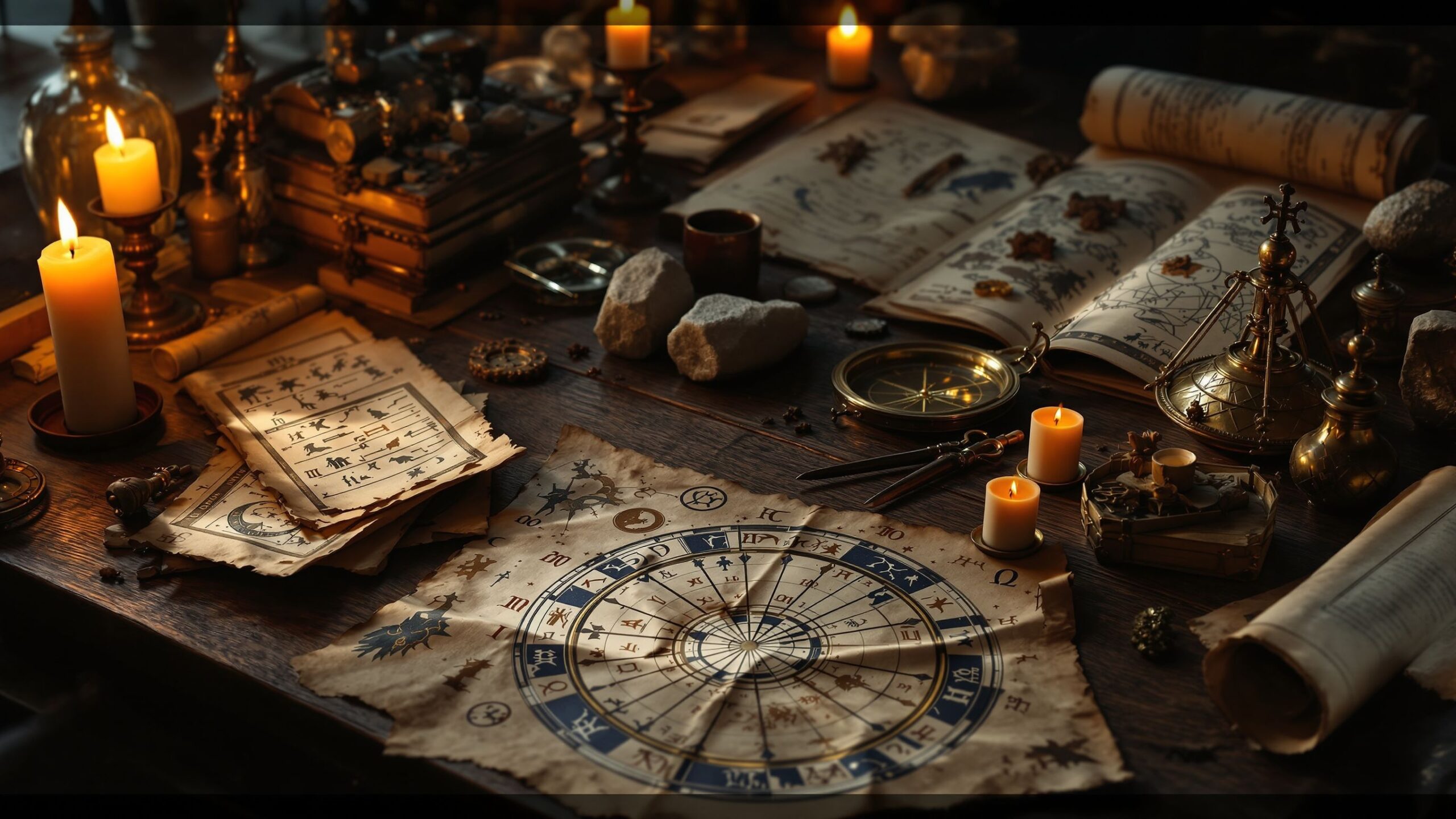
Today, zodiac symbols are everywhere. They appear in daily horoscopes, jewelry, tattoos, social media posts, and personal conversations. People casually say they are a Leo, a Virgo, or a Scorpio without always thinking about where those symbols came from or why they have lasted for thousands of years. The zodiac feels modern because it is constantly part of pop culture, but its roots are ancient, mysterious, and deeply connected to humanity’s earliest attempts to understand the sky.
Long before astrology apps and personality memes, civilizations looked upward to the stars for guidance. The movements of the Sun, Moon, and planets were seen as messages from the universe, and the zodiac became a way to organize that celestial language. These symbols were not created overnight. They were shaped by generations of observation, mythology, religion, and cultural storytelling.
Each zodiac sign carries more than personality traits. Behind every ram, bull, twins, crab, lion, and scorpion is a long history tied to ancient empires, sacred myths, and the human desire to find meaning in the cosmos.
Understanding where zodiac symbols come from makes astrology feel richer and far more fascinating. These are not random designs or trendy icons. They are symbols that have traveled across thousands of years of human civilization.
A: They developed from ancient sky-watching, mythology, seasonal cycles, and constellation traditions.
A: Not exactly; symbols represent astrological signs, while constellations are star patterns in the sky.
A: The ram reflects boldness, force, leadership, and spring’s fresh beginning energy.
A: The bull represents strength, fertility, patience, stability, and material abundance.
A: Libra’s scales symbolize balance, fairness, partnership, judgment, and harmony.
A: No, Aquarius is an air sign, even though its symbol is the water bearer.
A: Capricorn’s sea-goat combines ambition, endurance, ancient wisdom, and emotional depth.
A: The two fish suggest dual direction, emotion, dreams, spirituality, and unseen currents.
A: Yes, many glyphs visually echo animals, tools, waves, horns, arrows, or mythic symbolism.
A: They make astrology easier to recognize while preserving ancient stories, patterns, and meanings.
The Earliest Origins of the Zodiac
The roots of the zodiac begin in ancient Mesopotamia, particularly with the Babylonians around the second millennium BCE. These early sky-watchers were among the first people to systematically track the movements of celestial bodies and connect them to earthly events.
They noticed patterns in the Sun’s yearly journey across the sky and identified a path now known as the ecliptic. Along this path were constellations that appeared repeatedly during certain seasons. These constellations became the foundation of what we now call the zodiac.
The Babylonians divided this celestial belt into twelve sections, each linked to a recognizable constellation. This system helped them predict agricultural seasons, religious festivals, and political events. Astrology was not entertainment. It was a serious part of governance, farming, and spiritual life.
Their original zodiac laid the groundwork for the twelve signs still recognized today, though some names and meanings evolved as the system traveled across cultures.
Why There Are Twelve Zodiac Signs
The number twelve was not chosen randomly. Ancient astronomers noticed that the lunar year and solar year could be organized around twelve repeating cycles. There were roughly twelve full moons in a year, and dividing the Sun’s path into twelve equal parts created a practical and symbolic system.
Each zodiac sign covered approximately thirty degrees of the sky, creating a full 360-degree celestial circle.
This mathematical elegance made the zodiac useful for both astronomy and astrology. It connected the heavens to the calendar and gave structure to time itself.
The number twelve also held spiritual importance in many ancient cultures. It symbolized order, completion, and cosmic balance. This helped strengthen the zodiac’s sacred significance far beyond simple star observation.
How Greek Mythology Shaped Zodiac Symbols
While the Babylonians created the foundation, the ancient Greeks gave many zodiac signs the mythological stories people still recognize today.
When Greek scholars encountered Babylonian astrology, they adapted it into their own philosophical and mythological framework. They connected constellations to gods, heroes, and legendary creatures from Greek mythology.
Aries became associated with the golden ram from the story of Jason and the Argonauts. Taurus was linked to Zeus transforming into a bull. Gemini represented the twins Castor and Pollux, symbols of brotherhood and duality. Leo connected to the Nemean lion defeated by Hercules.
These stories gave the zodiac emotional and symbolic depth. The signs were no longer just markers in the sky. They became living archetypes filled with lessons about courage, transformation, love, sacrifice, and destiny.
This Greek influence shaped much of Western astrology as we know it today.
The Meaning Behind Each Animal Symbol
Many zodiac signs are represented by animals because ancient cultures believed animals carried spiritual meaning and reflected human behavior.
The ram of Aries symbolized courage, leadership, and forward movement. The bull of Taurus represented strength, fertility, and stability. The lion of Leo reflected royalty, pride, and power. The scorpion of Scorpio symbolized danger, transformation, and emotional intensity.
Even signs without animal symbols carried equally powerful imagery. Libra’s scales represented justice and balance. Aquarius, the water bearer, symbolized knowledge and renewal rather than the water element itself.
These symbols were chosen because they reflected both visible characteristics in nature and deeper human psychology. Astrology has always connected the external world to the inner self.
Zodiac Symbols in Ancient Egypt
Ancient Egypt also played a major role in the evolution of astrology. Egyptian priests carefully observed the stars and connected celestial movements to divine order, farming cycles, and the flooding of the Nile River.
Although the Egyptian zodiac was not identical to the Babylonian system, it strongly influenced later astrology through contact with Greek and Roman scholars.
Egyptians associated stars and constellations with gods and spiritual protection. Their temples often aligned with celestial events, showing how deeply astronomy and religion were connected.
Later, during the Hellenistic period in Alexandria, Egyptian, Greek, and Babylonian knowledge blended together. This created a powerful center of astrological study that helped shape the birth chart system still used today.
Roman Influence and the Spread of Astrology
The Romans inherited much of Greek astrology and helped spread zodiac symbolism across Europe.
As Roman culture expanded, zodiac signs appeared in art, architecture, mosaics, and literature. Astrology became part of both elite scholarship and everyday life.
Roman names for planets and zodiac associations became deeply embedded in Western tradition. Much of the terminology still used in astrology today comes through Roman influence.
Even after the fall of the Roman Empire, zodiac knowledge survived through manuscripts, scholars, and religious debate. Medieval Europe preserved and transformed astrology rather than erasing it completely.
Astrology During the Middle Ages
During the Middle Ages, astrology existed in a complicated relationship with religion. Some religious authorities rejected it, while others quietly studied it alongside astronomy, medicine, and philosophy.
Kings consulted astrologers before wars and political decisions. Physicians used astrological charts to guide treatments. Scholars viewed celestial movements as part of divine design.
Zodiac symbols appeared in old manuscripts, church carvings, and medieval calendars. They were seen not just as mystical signs but as practical tools for understanding time and fate.
This period helped preserve ancient astrological knowledge and carried it into the Renaissance, where interest in classical learning revived even more strongly.
The Renaissance and Astrology’s Rebirth
The Renaissance brought renewed fascination with ancient wisdom, and astrology experienced a major revival.
Artists, philosophers, and scientists studied the stars with both curiosity and reverence. Even famous thinkers who helped shape modern science were influenced by astrology.
Birth charts became popular among nobility. Zodiac symbolism appeared in paintings, royal courts, and intellectual circles.
Astrology was still closely connected to astronomy during this time. The separation between science and mysticism had not yet fully formed.
This era helped solidify the zodiac as both a symbolic language and a personal system of self-reflection.
Why Zodiac Symbols Still Matter Today
In modern life, zodiac symbols continue to thrive because they offer something people still seek: meaning, identity, and connection.
Even people who do not fully believe in astrology often feel drawn to the symbolism. The signs offer language for personality, emotional patterns, relationships, and personal growth.
A Scorpio does not just see a scorpion. They see emotional intensity, transformation, and resilience. A Virgo does not just see the maiden. They see service, intelligence, and precision.
These symbols survive because they speak through archetypes. Humans naturally respond to symbols that reflect universal experiences.
The zodiac has lasted not because everyone believes it predicts the future, but because it helps people tell stories about themselves.
The Difference Between Symbol and Stereotype
One of the biggest misunderstandings in modern astrology is reducing zodiac symbols to shallow stereotypes.
People often joke that Geminis are fake, Leos love attention, or Capricorns only care about work. But the original symbols were never meant to be insults or simplified labels.
Each zodiac sign represents a full spectrum of strengths, struggles, lessons, and spiritual themes.
The lion is not just pride. It is courage, visibility, and heart. The scales are not just indecision. They are justice, beauty, and the constant search for harmony.
Understanding the history behind zodiac symbols helps restore their depth and dignity.
Final Thoughts on Zodiac Symbols and Their Origins
The zodiac is far older than modern horoscopes. Its symbols were born from ancient civilizations staring into the night sky and asking the same questions people still ask today: Who are we? Why are we here? What patterns shape our lives?
From Babylonian astronomers to Greek mythmakers, Egyptian priests, Roman scholars, and Renaissance philosophers, the zodiac has traveled through history as both science and symbol.
Each sign carries centuries of observation, storytelling, and human imagination. These symbols survived because they offered more than prediction. They offered meaning.
When you look at your zodiac sign, you are not just looking at a trendy personality label. You are looking at a piece of ancient human history, carried forward through stars, myths, and generations of wonder.
That is what makes zodiac symbols timeless.

